
When to clean your tank
Septic tanks should be cleaned every three to five years depending on household size and usage. Regular pumping of the septic tank will reduce accumulation of scum and sludge layers in the septic tank.
The scum layer should never reach 24 inches thick. If the depth reaches 24 inches or more, material will flow into the outlet pipe then into the drainfield causing a blockage and drainfield failure.
To have your septic tank cleaned, you will need to locate your main compartment and second compartment lid of the septic tank. You will also need to uncover the baffle lids, allowing us to check your inlet baffle for blockages and clean the screen in the outlet baffle, if one is installed.
Septic tank lid location and number of lids vary by year installed and manufacturer. See the septic diagrams below.
Express Septic Service can locate and dig the septic tank lids for you, if you prefer not to do so, or if you do not know where the lids are located. We can obtain an as-built drawing (if available) from your county health department for you at no charge. An as-built will give the general location of the septic system components, but will not give the exact location of the septic tank lids.
types of Tanks
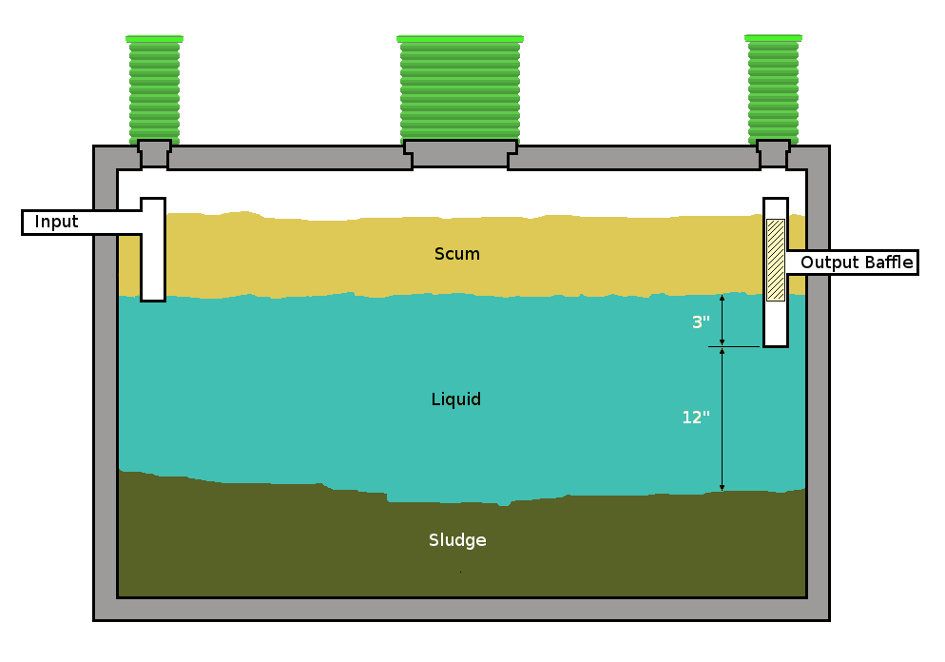
Single Compartment
500 – 1,000 Gallon Septic Tanks: Installed up to approximately 1976, this tank style will have one main lid and two smaller baffle lids on both ends of the tank as shown in the diagram.
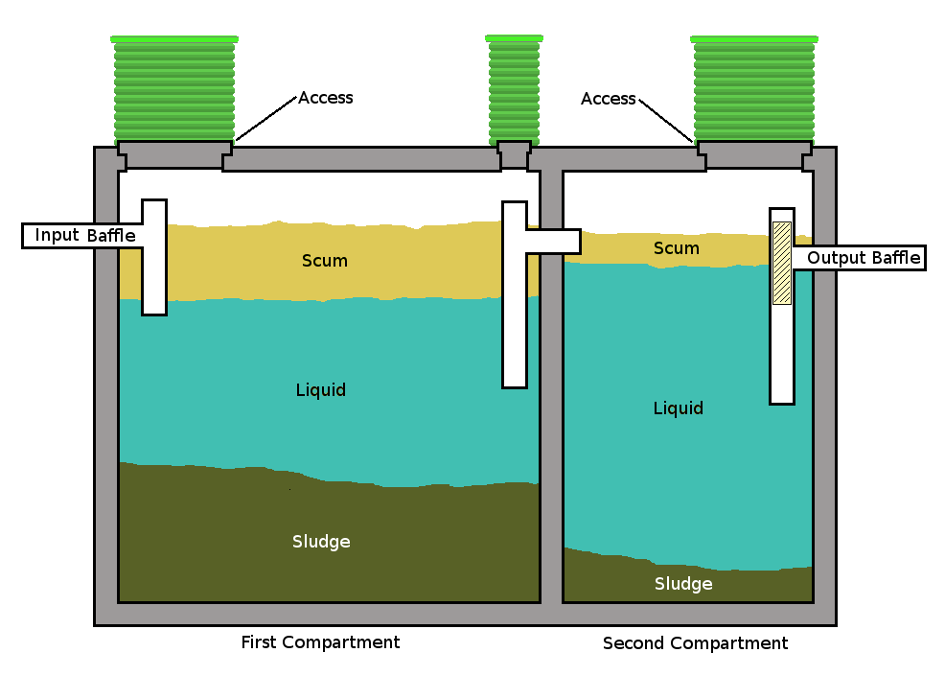
Two Compartments
This 1125-1200 gallon septic tank configuration has been installed beginning in late 1976 to now. This tank can have two main 24-inch lids or two main lids and two small baffle lids at both ends of tank directly above the inlet and outlet baffle, depending on the manufacturer.
You will be looking for two lids like these if there are risers to the surface on the tank. If the tank does not have risers, you will find two 24-inch diameter concrete lids as shown in the schematic. Riser lids can be below the surface which require locating and digging the riser lids as well.
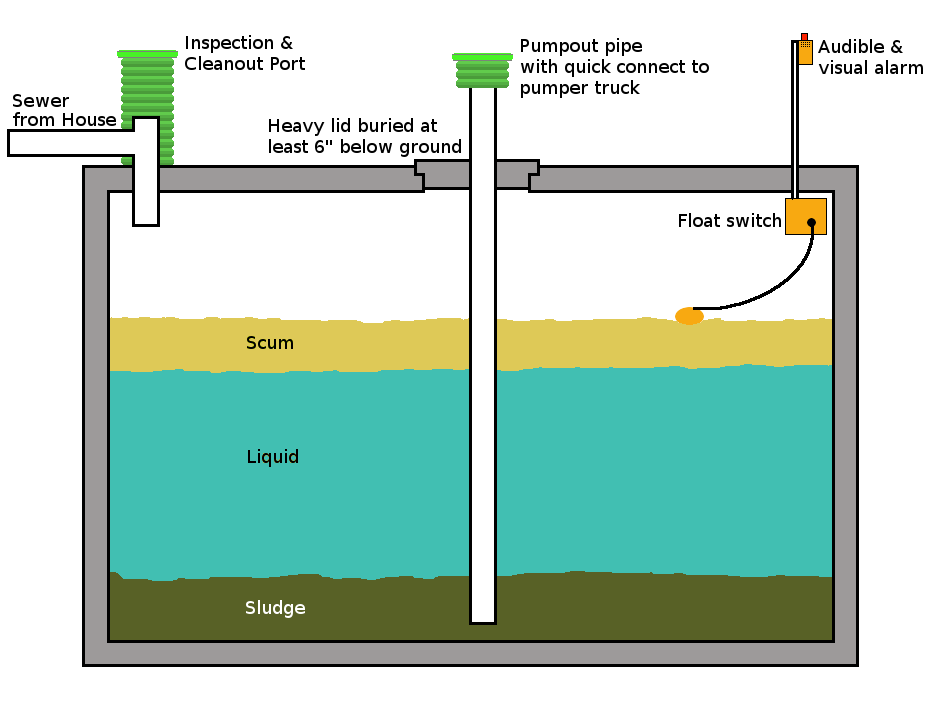
Holding Tank
A holding tank is an alternative to a conventional on-site sewage system. Not a septic tank, a holding tank stores household waste. They can be made of concrete, fiberglass or polyethylene, and they can be installed above or below ground. Holding tanks need to be pumped frequently depending on water and wastewater usage and the size of the tank.
Most holding tanks are equipped with alarms that will sound when they are nearly full and require pumping shortly thereafter. Failure to pump a holding tank will lead to wastewater backing up into the house or onto the ground.
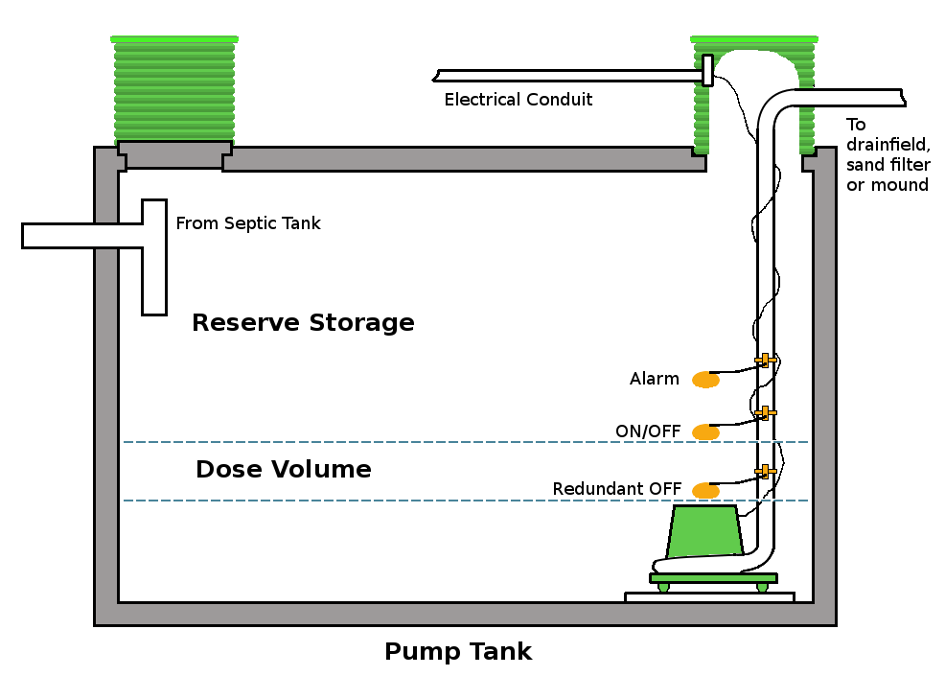
Pump Tank
In addition to a septic tank, some homes may have a pump tank or a pump basin. Pump tanks are underground near the septic tank.
Depending on the year the system was installed, you may have risers allowing easy access to inspect and maintain or repair the effluent pump. A pump tank or basin collects effluent from a septic tank or ATU (Aerobic Treatment Unit) before pumping the effluent to the drainfield.
The pump tank contains a sewage effluent pump, control floats, and a high water alarm. The control floats are set so that a specific volume of effluent is sent to the drainfield. When the effluent in the pump tank rises to the level of the float the pump is activated and pumps effluent out until it reaches the off float setting. An alarm is usually located in the basement, garage or side of the house that sounds when there is a problem or malfunction. When the alarm sounds there is reserve storage in the pump tank allowing light water use until the problem can be addressed.
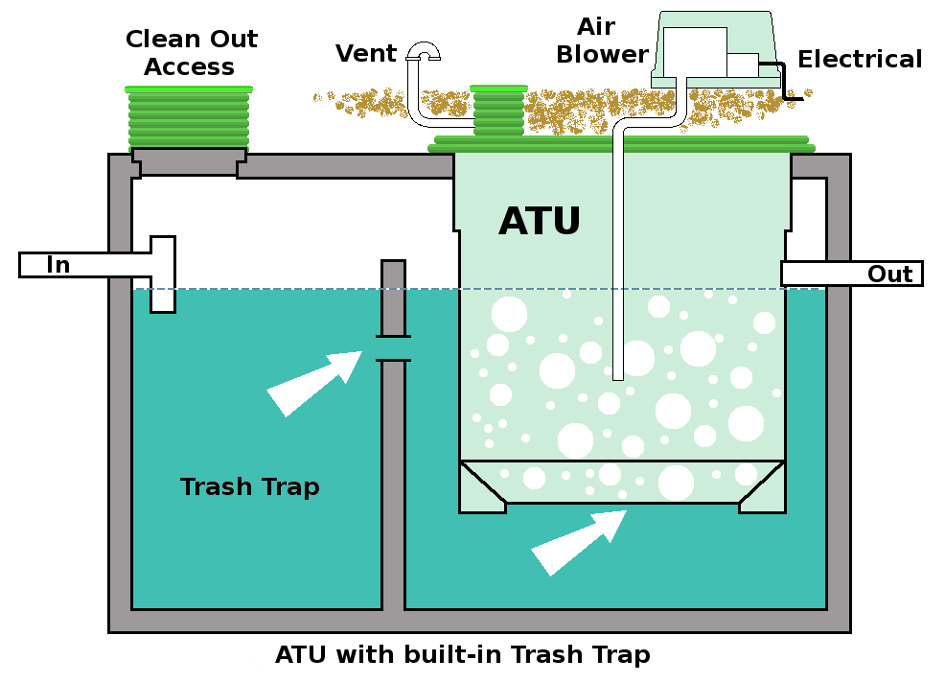
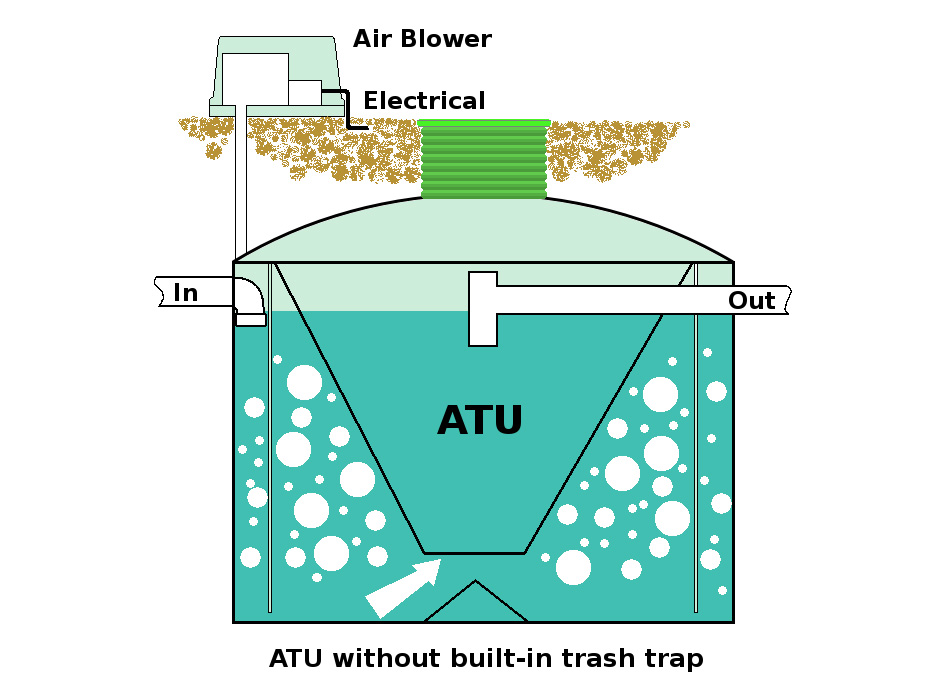
Aerobic Treatment Unit (ATU)
Homes with poor soil drainage, small lot size, or environmental concerns may use an alternative treatment system instead of a traditional septic tank and gravel trenched drainfield. Most alternative treatment systems consists of a multi-compartmented tank called an Aerobic Treatment Unit (ATU) consisting of three compartments: a “trash” compartment, an aeration chamber, and a clarifying compartment.
The trash compartment holds the solids for pretreatment and liquification of waste, and retains non-waste incidental products that get flushed down the toilet. The aerobic chamber treats the effluent by aerating the effluent with an air blower motor which also agitates the water so solids cannot settle, and the oxygenated effluent allows the digesting bacteria to thrive and significantly reduce the solids content. The clarifying chamber allows the remaining solids to settle, further clarifying the effluent. Some ATUs do additional treatment with ultraviolet light, or use chlorine tablets made specifically for that type of septic system. These components are designed to kill bacteria and pathogens before passing the effluent on to the drainfield. There are many different types of ATUs: Nuwater, Fast, Whitewater, and Norweco are the most popular in Washington state and all have passed rigorous testing before being approved.
Each ATU system may have a different type of drainfield which can vary from gravity, pressure distribution, Glendon mound, sand filter, or drip irrigation. Due to the complexity of the system, all ATUs with pumps and treatment devices, must have regular maintenance and inspections performed every six months to a year depending on the type of system, county health department and manufacturer requirements. All routine operation and maintenance inspection or service must be performed by a Health Department Certified Operation and Maintenance Specialist, and some manufacturers require company certification as well. The operating and maintenance costs for ATUs are higher because of the number of different working components, periodic replacement of the ultraviolet light bulb (typically every two to three years), chlorine tablet addition every six months if required, the electrical demands of some of the components and the service contracts.
Again, it is imperative to have these types of systems monitored frequently and repaired as needed to ensure proper operation and to keep your system trouble free.