
Residential
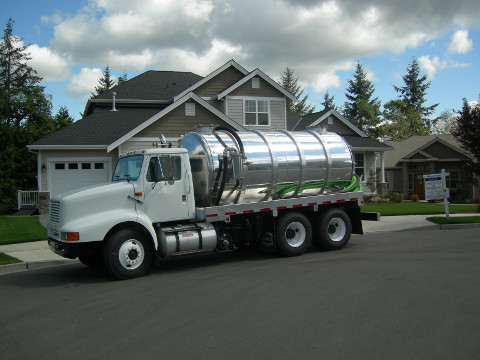
At Express Septic Service, we provide complete residential septic service for maintenance, problems or troubleshooting. If you are in the process of selling or purchasing a home, or if you are a realtor and need a septic service company, we take care of the inspection, pumping and all paperwork needed by the county, with just one call. Please see the list below for services we provide, and if you don’t see what you need, give us a call.
No extra charge to pay by credit card.
Commercial
All services we offer can be used for both Commercial Properties and Residential Properties. Commercial properties will have higher volume and the systems will be more complex and will need to be inspected and serviced more often. We offer service for septic tanks, grease traps/tanks, lift station, catch basins to retention ponds. If your system is in need of repair from drainline cleaning to pump replacement to maintenance inspections and video camera or hydro jetting of lines. Call Express Septic today to schedule your appointment.
We service apartment complexes and condo associations, HOAs, mobile home parks, churches, camps and campgrounds, schools, convenience stores and coffee shops, office buildings, manufacturing facilities, hotels, lift stations, and more. Call us!
Our Services
Septic tanks should be cleaned every 3 to 5 years depending on household size and usage. Regular pumping of your septic tank will reduce accumulation of scum and sludge layers in the septic tank. The scum layer should never reach 24 inches thick, if the material reaches 24 inches and beyond in depth, material will flow into the outlet pipe and into the drainfield and plug up your drainfield, causing drainfield failure.
To have your septic tank cleaned, you will need to locate your main compartment and second compartment lid of the septic tank.
You will also need to uncover the baffle lids as well, that will allow us to check your inlet baffle for blockages and clean the screen in the outlet baffle (if one is installed and your tank lid configuration). Septic tank lid location and number of lids vary by year installed and manufacturer.
Express Septic Service can locate and dig the septic tank lids for you, if you prefer not to do so, or if you do not know where the lids are located. We can obtain an as-built drawing (if available) from your County Health Department for you at no charge. An as-built will give the general location of the septic system components, but will not give the exact location of the septic tank lids.
In addition to a septic tank, some homes may have a pump tank or a pump basin.
Pump tanks are underground near the septic tank; depending on the year the system was installed, you may have access risers with a green round lid, the size of a garbage can lid at surface in your yard. This will offer easy access to inspect, maintain and pump the effluent if the pump has quit working. A pump tank or basin collects effluent from a septic tank, or ATU (Alternative Treatment Unit) before it pumps the effluent to the drainfield area.
The pump tank contains a sewage effluent pump, control floats, and a high water alarm. The control floats are set so that a specific volume of effluent is sent to the drainfield. When the effluent in the pump tank rises to the level of the on float the pump is activated and pumps the level of the effluent down until it reaches the off float setting.
There is also an alarm box located in the house (usually the basement or garage or side of house) that sounds when there is a problem or malfunction with any of the components in the pump tank. When the alarm sounds there is a reserve storage in the pump tank to provide the homeowner with light water use until the system can be addressed as to why the alarm has sounded.
Some homes may use an alternative treatment system (ATU) instead of a standard septic tank and drainfield.
Most alternative treatment systems use a multi compartmented tank, containing three different compartments: a trash compartment, an aeration chamber, and a clarifying compartment.
The trash compartment holds the solids for pretreatment and liquification of waste, and retains non waste products that get flushed down the toilet. The aerobic chamber treats the effluent by aerating the effluent in a tank with an air blower motor which also agitates the water so solids cannot settle, and by oxygenating the effluent will allow the bacteria to thrive and reduce the solids content. The clarifying chamber allows the remaining solids to settle, to further clarifying the effluent.
Some ATUs will also provide additional treatment with an ultraviolet light, or they may use chlorine tablets that are made specifically for your type of septic system, these components are designed to kill bacteria before passing the effluent onto the drainfield.
Due to the complexity of the system, all ATUs with pumps and treatment devices must have regular maintenance and inspections. All routine operation and maintenance inspection or service will need to be performed by a Certified Operation and Maintenance Specialist and some manufacturers require you to be certified by their company to perform these services. The operating and maintenance costs are higher due to the number of different working components: the ultraviolet light bulb needs to be replaced every two to three years, and if you have chorine tablets they will need to be added every six months.
Again, it is imperative these types of systems are monitored frequently and repaired and pumped as needed to ensure proper operation and help keep your system trouble free.
A holding tank is not a septic tank. A holding tank stores household waste and does not allow any of its contents to leak into a drainfield, whereas a septic tank will allow waste water to flow Into a drain field.
Holding tanks can be made of concrete, fiberglass or polyethylene. Holding tanks can be installed above or below ground. Holding tanks need to be pumped frequently depending on the water and waste water usage and the size of the tank.
Most holding tanks are equipped with alarms that will sound when they are nearly full and will require pumping shortly thereafter. Failure to pump a holding tank will lead to waste water backing up into the house or onto the ground.
We offer:
- Monitor and Maintenance (M&M) Inspections and Contracts for Kitsap County
- Operation and Maintenance (O&M) Inspections for Pierce County
- Operation and Maintenance (O&M) Inspections for Mason County
Did you know that Washington State has a mandated program for local health jurisdictions? This program was written by the Washington State Board of Health to fulfill the requirements of both the WAC and RCW 70.118. Each County Health jurisdiction is mandated to have a program in place to ensure that all onsite septic systems throughout the county are in good working order. This program is to reduce the health risk from failing septic systems that can contaminate our drinking water, ground water and surface waters such as rivers, lakes as well as our fish and shellfish harvest areas. Monitoring and Maintenance (M&M) and Operation and Maintenance (O&M) both refer to a program for inspections and monitoring and maintain your septic system.
All inspections need to be done by a certified Monitoring and Maintenance (M&M) specialist.
If you live in Kitsap, Pierce, or Mason county and you have an alternative system, you must have a maintenance contract and/or a county-approved service provider to ensure your septic system is routinely inspected and operating efficiently and trouble free. Some alternative systems are required to be inspected as often as every six months due to the complexity of the system. We perform inspections per county requirements to make sure your system is working properly and we are able to submit all county inspection reports for you online. We will follow up every service with a copy of the county maintenance inspection report and any recommendations or repairs needed to ensure the longevity of your septic system and its components.
All paperwork filed online per county requirements:
- Report of System Status Application (RSS) Pierce County
- Property Conveyance Application (Kitsap County)
- Operation and Maintencace specialist on staff
No extra charge to bill to escrow.
If you’re a realtor, a homeowner who is selling their home or a home buyer purchasing a home, Express Septic Service can help with the process from the inspection to filing all paperwork that is required by the County. We provide a thorough and honest evaluation of all the components of your septic system.
Our thorough septic system evaluations include examination of all mechanical and electrical components, measuring sludge levels, inspection of baffles and filters, and much more. To do a complete inspection of the pump with electrical components, the power and water need to be on. Upon completion of an inspection, our certified technicians will provide recommendations for any needed pumping or repair. We recommend pumping the septic tank to be able to do a complete inspection below the water level of the tank.
The Tacoma/Pierce County Health Department (TCPHD) requires that all homes with a septic system being sold in Pierce County have an inspection and pumping completed prior to the transfer of title. Once the inspection and report have been entered, the Report of System Status needs to be completed; you can submit it online or you can choose to have Express Septic Service apply for the Report of System Status (RSS). After the county receives all paperwork, they have 10 business days to make a site visit and evaluation and issue an RSS. If we find any components in need of repair, we make that recommendation before the report is entered that repairs be made. If the repairs are not made and the report has been entered online, the TPCHD may put the RSS on hold until the system has been brought up to code. After the inspection, we submit a complete report to the County.
The Mason County Health Department (MCHD) requires that all homes with a septic system be inspected and pumped as needed prior to transfer of ownership. You must have a current inspection and report on the status of the on-site sewage system, prior to closing. If your gravity septic system has been inspected or pumped within three years and reported to the County that is acceptable. For all other systems inspection and pumping are required within a year of sale. All Inspections must be done by a certified pumper or a Mason County Operation and Maintenance Specialist.
If we find any components that are in need of repair, we recommend repairs be made before the report is submitted. If the repairs are not made, the County may hold the transfer of ownership until deficiencies are repaired.
The Kitsap County Health Department (KCHD) requires that all homes with a septic system being sold in Kitsap County be inspected, and pumped if needed, prior to the transfer of title. Once the inspection and report have been entered, the Property Conveyance Application (PCI) needs to be completed. You can submit it online or you can have Express Septic Service apply for the PCI. After the county receives all paperwork they have to make a site visit and evaluation and issue the Property Conveyance. If we find any components that are in need of repair, we recommend completing repairs before the report is submitted. If the repairs are not made and the report has been entered online the KCPHD may put the PCI on hold until the system has been brought up to code. After the inspection we submit a complete report to the county.
Depending on what county you live in, if you are adding square footage to your property and if your home is served by a septic system, your septic system may need an inspection to make sure it is adequate for the changes that are being made to your home.
If the county has no records of your septic system, they may require an as-built drawing of the exact location of the tank and drainfield area. Call Express Septic Service if you need to have an inspection and evaluation of your septic system. We can also provide the drawing for tank location and drainfield area. We can also provide upgrades to your system if required by the county.
Septic tanks can sometimes be hard to find. They are typically located underground, making them difficult to locate.
There are a few reason why we may not be able to locate your septic, including location under a concrete or asphalt driveway where there is no access to the tank, or beneath a gravel driveway where the ground is very compacted and hard, or if the septic tank is under a concrete patio or under a deck where there is limited access to the septic lids.
We recommend electronically locating the lids before removing a section of patio or deck. After using all other avenues available to locate your tank, from county records to probing the area, we use our locator service.
We can electronically locate your septic by flushing a transmitter down the toilet and using a receiver to locate the transmitter. If your septic is currently backed up, then the transmitter will not work due to the restricted flow to the septic tank. Occasionally, root intrusion or a collapsed sewer line will stop the transmitter from reaching the septic tank, thus giving a false location of the septic tank.
If you are making home improvements and adding square footage, carports, decks, patios, storage sheds, a hot tub, a kids play area, barbeque pit, additional parking, driveways, pasture for animals to graze, or landscaping, you need to know your drainfield location. If a permit is required for your project, and there is not a current as-built or record of drawing on file with the Health Department, the Health Department requires a current drawing. Call Express Septic Service, we can locate your drainfield and provide the record to you and to the Health Department. We can map out your drainfield lines by using a video camera or by using a locator with a transmitter.
The maintenance of your drainfield starts with the maintenance and care of your septic tank. When the waste water leaves your septic tank, the effluent trickles through perforated pipe for additional treatment. The soil acts as a natural filter that contains organisms that treat the effluent. Most common causes of drainfield failure are roots and solids that have flowed into the drainfield from the septic tank. Root intrusion can come from plants, trees or vegetation that is near or on top of the drainfield area. Roots grow into the drainfield lateral pipe and can stop the effluent from being absorbed into the ground, eventually causing the drainfield not to take effluent and causing surfacing or backing up into your home.
Keep trees and shrubs away from the drainfield, plant only shallow rooted grass and plants. Solids damage the drainfield by clogging the small holes in the drainfield pipes and preventing the effluent from being absorbed into the ground. Below are some helpful tips for drainfield maintenance.
- Know the location of your drainfield and reserve drainfield.
- Keep heavy equipment and vehicular traffic off your drainfield. Cars and heavy equipment can crack drainfield pipes and compact soil.
- Keep livestock off drainfield area.
- Keep water usage to a minimum. Drainfields are designed to be able to absorb a specific number of gallons per day. The ground acts as a sponge and when we have heavy rains, the ground can only absorb so much water.
- Don’t build over your drainfield. This includes patios, carports, and other structures.
- Don’t plant a vegetable garden over a drainfield. You risk the possibility of food contamination.
If you are a homeowner and having reoccurring clogs, slow drains, or think you may have a problem with root intrusion in your drainfield, a crushed pipe in your sewer line or drainfield, or, if you are landscaping, remodeling or making an addition to your home and need to know the exact location of your drainfield, we can locate and inspect each drainfield lateral and evaluate the integrity of the lines.
If you are purchasing a home and would like to know the condition of your septic system lines or the sewer line connected to the city sewer, we can determine the integrity and condition of the lines and make sure they are in good working order.
Our camera provides color visual inspection of all sewer lines by using a video camera on a sewer cable that transmits video and pictures from the sewer lines back to a monitor. Our camera service shows the pipe length so we can analyze and identify the problem area and accurately mark and fix the specific area in need of repair.
Our camera records a video of the inspection as well as photographing areas of interest during the inspection, and you will receive a copy.
If your septic alarm light is on or if your alarm has sounded, that means the effluent level is high in your pump tank, and your pump may not be working properly. When the alarm sounds this does not mean the septic tank needs cleaning, however it may be necessary to empty the tanks in order access the pump and diagnose the problem.
There are a number of reasons why the septic alarm will sound. You may have a faulty pump, control floats are tangled or have come loose, or a tripped breaker, unplugged power cord, or the pump switch is off. Call our office to schedule an appointment for our technician to diagnose the problem and get your septic working again.
If you do not have a gravity fed drainfield, you have a pump that moves liquid from the pump tank to the drainfield. You may have an effluent pump, sewage pump, aerator pump or a grinder pump that pumps to city sewer.
If any of these pumps fail and stop working, your septic system is no longer functional and the pump must be replaced promptly to prevent back up into your home or overflow onto the ground.
Pumps can stop working without warning and the average life of a pump is 10-15 years. We only use high quality, heavy duty replacement pumps that are designed for sewage and are only sold by reputable distributors.
Your septic tank will have two or three baffles depending on the style of tank. The inlet baffle is the first baffle on the tank. Located at the front of the tank, this baffle directs the flow downward coming into the tank from the house. This baffle is important because it directs the flow of waste water into the tank, with heavier solids falling to the bottom and lighter particles like toilet paper floating to the top and forming the scum layer.
If your tank has two compartments you will also have a crossover baffle that allows liquid to flow from the first compartment into the second compartment. Lastly, your septic tank will have an outlet baffle thatat the back of the tank. The purpose of this baffle is to protect your drainfield from solids leaving your tank and causing drainfield problems, and only allowing clarified wastewater to flow into your drainfield.
Occasionally, a baffle will need to be replaced. The most common reasons are deterioration, improper installation, poor design, and a missing baffle.
If your septic system was installed in the early 1990s, you may have an effluent filter or screen that fits into the outlet side of the septic tank. Effluent filters can extend the life of your septic system.
By installing an effluent filter, large solids become trapped in the screen/ filter and remain in the septic tank. Even septic tanks that are pumped regularly will discharge small amounts of lint, soap, grease and other forms of suspended solids.
As solids accumulate in the drainfield, the soil in the drainfield laterals become clogged, resulting in the drainfield laterals failing. Some drainfields can fail prematurely due to an excessive amount of solids escaping from the septic tank.
Effluent filters are very affordable and provide significant protection against drainfield failure. If your screen becomes clogged, then it is doing the job as it is intended to do. Screens need to be cleaned, on the average, every six months or more frequently depending on usage or if you have a garbage disposal.
You can hire someone to clean the screen, or you can clean it yourself. Simply remove the screen from the outlet end of the tank and hose it off over the inlet end of the septic tank. It is always wise to use rubber gloves and eye protection when cleaning the screen.
Risers are required for all new septic systems. We can retrofit risers to fit all existing septic systems. Risers or extension columns will bring the lids of your septic tank up to the surface, eliminating having to uncover the lids of your septic tank.
Septic tank lids are typical buried underground and require hand or machine digging to make them accessible. The depth of your septic can vary from a few inches to several feet deep. When your tank is buried more than 12 inches below ground, riser extensions will give quick access in case a backup should occur by eliminating having to dig the dirt off your septic tank lids, saving you time and money. Risers can be measured and installed to custom fit your specific septic system.
Hydro jetting is used to flush out the drainfield lateral lines that have a heavy buildup of sludge, dirt, and fine roots that have built up over time on the inside of your drainfield pipes, causing a blockage of the line.
Vacuuming the drainfield lines with the tremendous suction from the pump truck after hydro jetting also helps clean the drain rock and pipes.
By using this method, the hydro jetter will use high pressure water with a spinning nozzle. As water is forced out of the tip, it will dislodge the blockage.
Your drainfield is located underground and vulnerable to damage. If your drainfield is unable to absorb any liquid, your drainfield laterals may be clogged from excessive sludge build up, tree root intrusion or possibly crushed pipes.
If this happens, you will have to have your septic lines cleaned or replaced to remove obstructions or intrusions. Our operation specialists can diagnose your septic problems, whether large or small, to determine the best action to properly repair your system in a timely matter to get your system up and working.
Don’t forget to have your septic inspected and pumped on a regular basis to keep your system trouble free and in good working order.
Septic systems have many different working components and will experience problems over time.
Troubleshooting septic problems requires knowledge of all different types of septic systems and components and the best way to fix the problem.
If you are having septic problems and are unclear of what is causing them, we can determine the cause and offer professional advice on the best service option to repair your system.
Septic systems have various components and as your system ages, some of the components may deteriorate, leading to necessary repairs. Depending on the type of repair required, the price can vary dramatically.
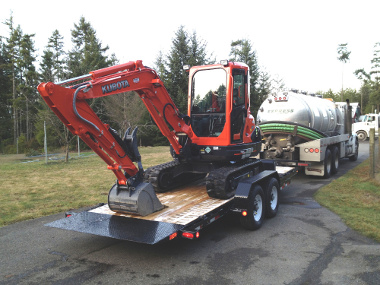
We provide excavation services for utilites, ditches, fish ponds and landscaping, as well as:
- Drainfield overgrowth clearing
- Retention pond restoration
- Tree and stump removal